Introduction: A Bold Step into Hydrogen Mobility
As the global automotive industry races toward a zero-emission future, Toyota has remained one of the most committed manufacturers in developing hydrogen fuel cell technology. The 2026 Toyota Mirai is not a concept or a prototype — it is a production-ready, luxury hydrogen-powered sedan that produces zero tailpipe emissions, with the only byproduct being pure water vapor. At AutoTickers, we believe understanding this technology is essential for Azerbaijani consumers who are considering the future of personal mobility.
Design and Exterior: Elegant and Purposeful
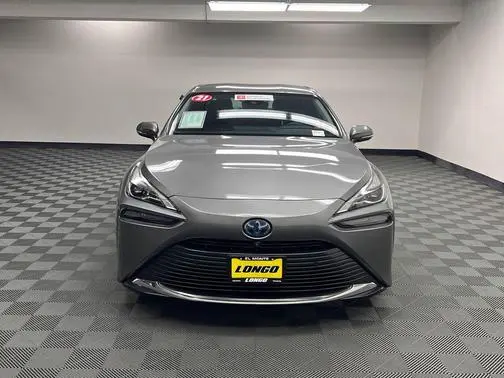
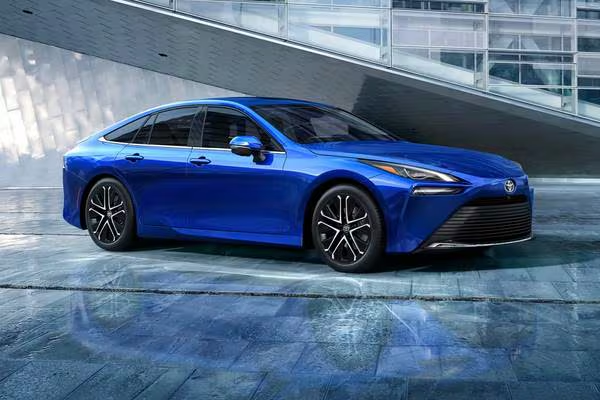
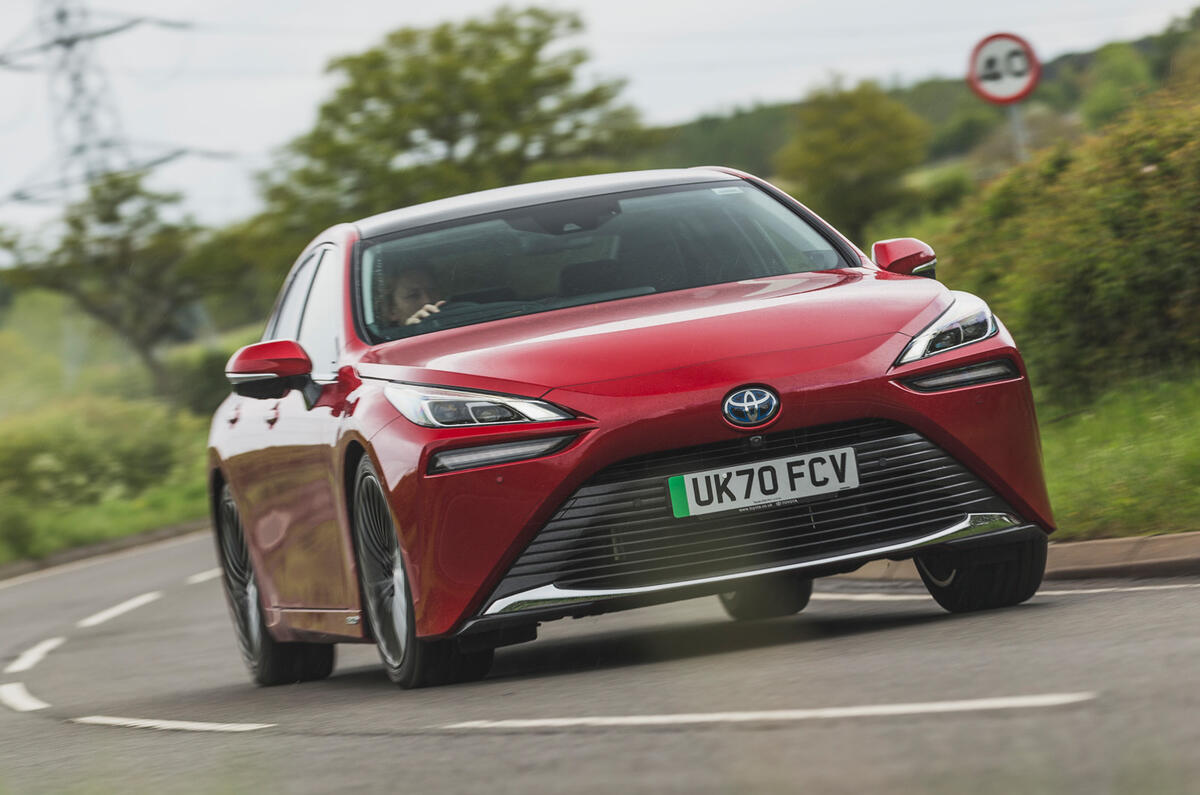
The 2026 Toyota Mirai continues with the bold and aerodynamic design language introduced in the second generation. Built on Toyota's GA-L rear-wheel-drive platform — the same architecture underpinning the Lexus LS — the Mirai carries a low-slung, fastback profile that turns heads on any road. The front fascia features a wide, aggressive lower intake that channels cooling air to the fuel cell stack, while sharp LED headlamps and a sculpted hood give it a premium, futuristic presence.
Available in a range of sophisticated colors including Hydro Blue Contrast Layering, Oxygen White, and Supersonic Red, the Mirai is designed to make a statement. Its dimensions — 4,975 mm in length, 1,885 mm in width, and 1,470 mm in height — place it firmly in the full-size sedan category, competing with the likes of the BMW 5 Series and Mercedes-Benz E-Class in terms of presence and road feel.
How Does Hydrogen Fuel Cell Technology Work?
This is where the Mirai truly distinguishes itself, and for many Azerbaijani drivers, this technology will be entirely new. Let us break it down in simple, clear terms.
The Hydrogen Fuel Cell Stack
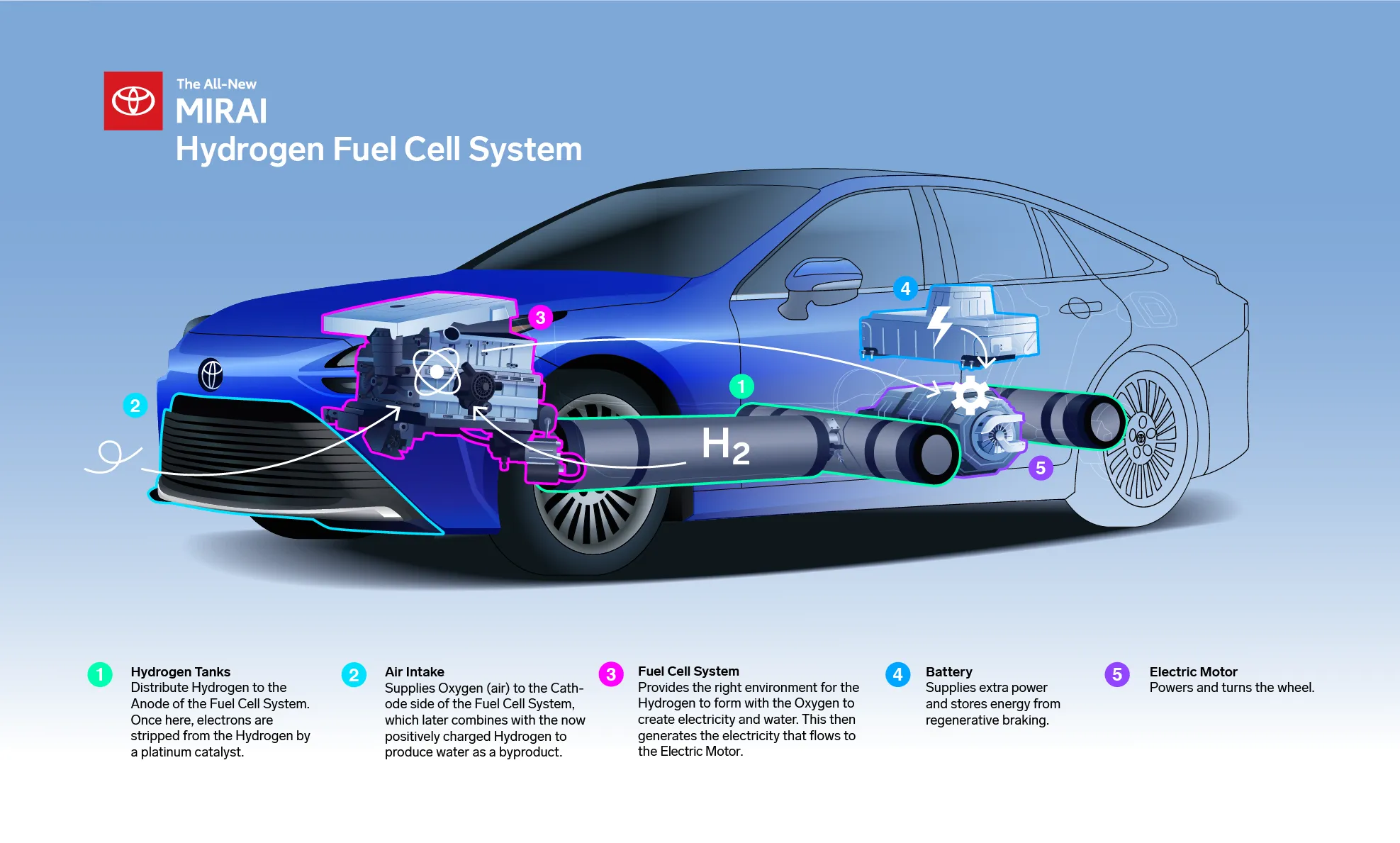
At the heart of the Mirai is a Polymer Electrolyte Membrane (PEM) fuel cell stack. Think of it as a highly advanced electrochemical generator. Here is how it works step by step:
- Step 1 – Hydrogen Storage: The Mirai carries compressed hydrogen gas in three high-pressure carbon-fiber reinforced tanks located beneath the cabin and rear seat. These tanks hold approximately 5.6 kg of hydrogen at a pressure of 700 bar (approximately 10,150 PSI), which is an extraordinarily high pressure safely managed by Toyota's advanced tank construction.
- Step 2 – Oxygen Intake: As you drive, the vehicle draws in ambient air through its front intake. This air passes through a filter and humidifier before reaching the fuel cell stack.
- Step 3 – The Electrochemical Reaction: Inside the fuel cell stack, hydrogen molecules (H₂) are fed to the anode side of each cell. A catalyst — made of platinum — splits the hydrogen into protons (H⁺) and electrons (e⁻). The protons pass through the polymer electrolyte membrane to the cathode side, while the electrons are directed through an external circuit, generating electrical current that powers the motor.
- Step 4 – Water as the Only Byproduct: At the cathode, the protons and electrons recombine with oxygen from the air to form water (H₂O). This water is either expelled as water vapor from the exhaust or briefly collected and discharged as liquid water when you press the dedicated water release button inside the cabin.
This entire process is silent, continuous, and produces absolutely zero harmful emissions. The Mirai essentially runs on air and hydrogen, making it one of the cleanest vehicles ever built for public roads.
The Hybrid Buffer Battery
The Mirai also incorporates a compact lithium-ion buffer battery that stores excess energy recovered during regenerative braking. This battery provides additional power during peak demand moments, such as hard acceleration, and ensures seamless energy delivery at all times.
Performance: Refined, Quiet, and Surprisingly Capable
The 2026 Toyota Mirai is powered by a single rear-mounted electric motor producing 182 horsepower (134 kW) and 300 Nm of torque. Power is delivered to the rear wheels, providing a smooth, rear-wheel-drive character that enthusiast drivers will appreciate.
- 0 to 100 km/h: Approximately 9.0 seconds
- Top Speed: 175 km/h (electronically limited)
- Drive Type: Rear-Wheel Drive
While these figures are not sports car territory, the Mirai's real virtue lies in how it delivers power — silently, smoothly, and with instant torque response. The low center of gravity achieved by positioning the hydrogen tanks and fuel cell system low in the chassis results in remarkably composed handling for a large sedan.
Range and Refueling: The Key Consideration
One of the most impressive aspects of the Mirai is its real-world driving range. On a full tank of hydrogen, the 2026 Toyota Mirai offers a claimed range of approximately 650 km (WLTP). In real-world mixed driving conditions, figures of 550–600 km are consistently achievable, which comfortably rivals many battery electric vehicles in this class.
Refueling the Mirai is a critical point of discussion for Azerbaijan. Unlike BEVs that require 30–60 minutes for a fast charge, the Mirai can be refueled at a hydrogen station in approximately 3–5 minutes — virtually identical to filling up a conventional petrol vehicle. This is a significant practical advantage for drivers who value time efficiency.
A Note on Hydrogen Infrastructure in Azerbaijan: It is important for AutoTickers readers to understand that public hydrogen refueling infrastructure in Azerbaijan is currently in its very early stages of development. Azerbaijan, as a country with significant natural gas and renewable energy resources, has strong potential to develop green hydrogen production. For early adopters, private or fleet-based hydrogen supply arrangements may be necessary. This is a limitation in the short term but an exciting opportunity as the country's clean energy infrastructure develops.
Interior and Comfort: A Genuine Luxury Experience
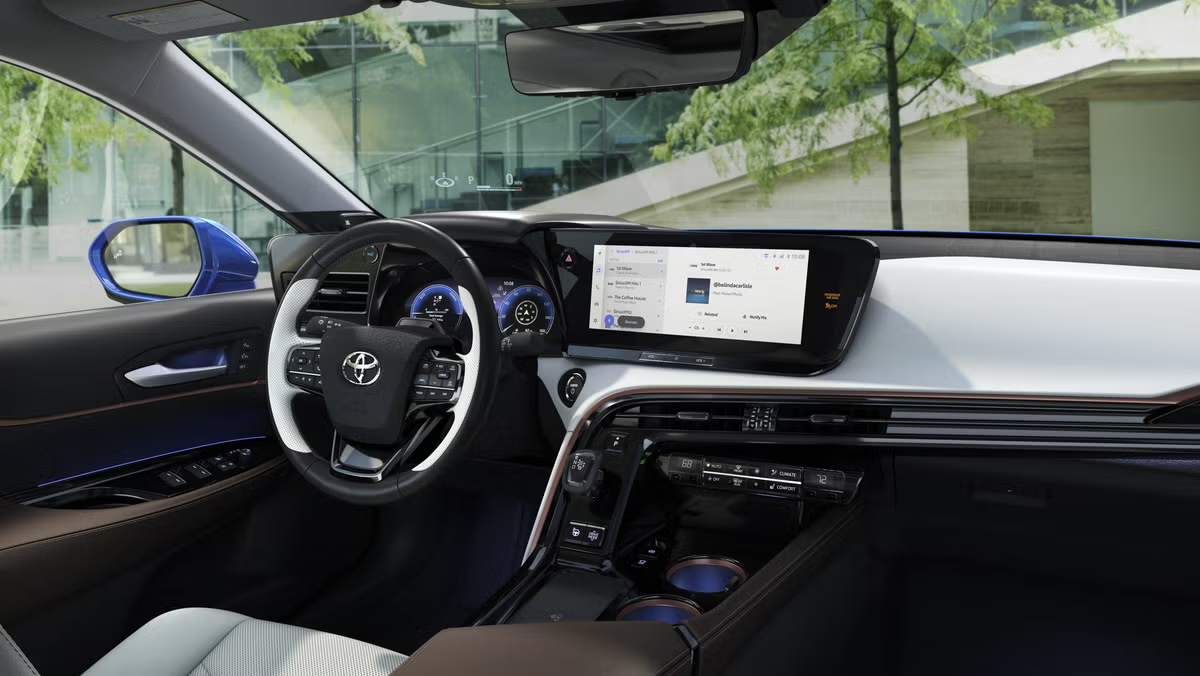
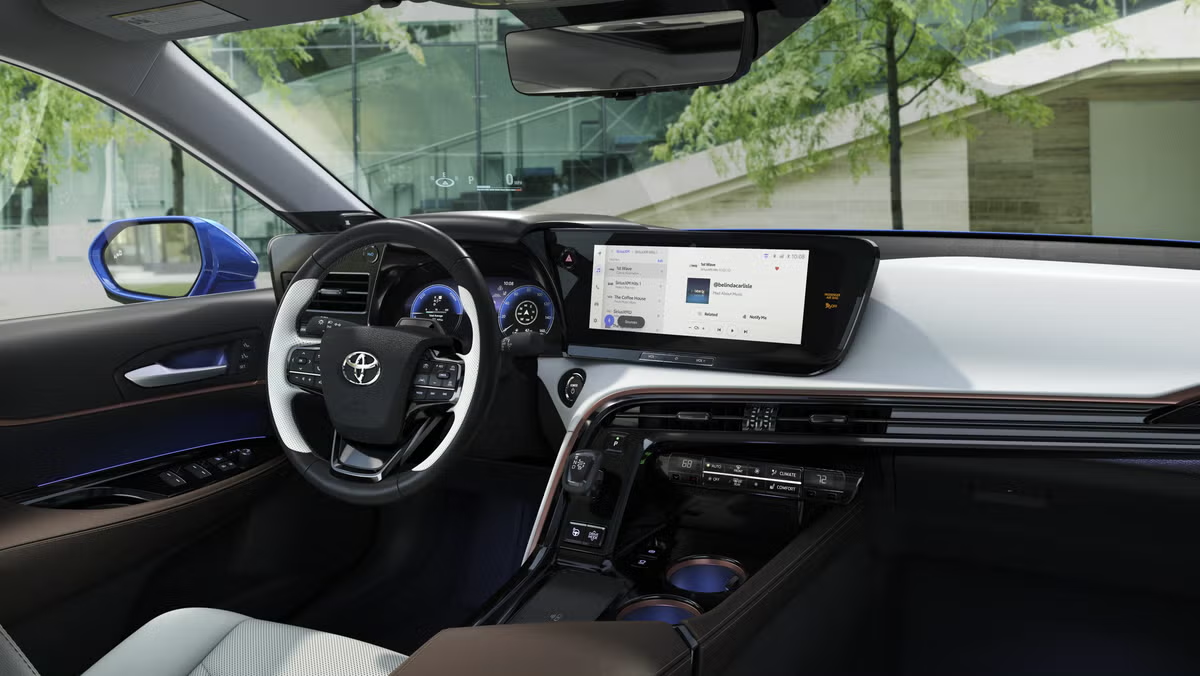
Step inside the 2026 Toyota Mirai and you are greeted with a cabin that rivals dedicated luxury sedans. The interior features a sweeping dashboard design with a 12.3-inch infotainment display powered by Toyota's latest multimedia system, supporting Apple CarPlay, Android Auto, and connected navigation services.
The driver faces a 8-inch digital instrument cluster that provides real-time data on hydrogen levels, fuel cell output, battery charge status, and range. The overall layout is clean, modern, and intuitive.
- Seating: Five-seat configuration with heated and ventilated front seats and heated rear seats on higher trims
- Materials: Genuine leather upholstery, open-pore wood trims, and soft-touch surfaces throughout
- NVH: Exceptional cabin insulation results in an almost whisper-quiet interior, even at motorway speeds
- Boot Space: 321 liters — slightly reduced compared to conventional sedans due to hydrogen tank placement, but practical for everyday use
Technology and Safety Features
The 2026 Mirai comes equipped with Toyota's comprehensive Toyota Safety Sense 3.0 suite, which includes:
- Pre-Collision System with Pedestrian and Cyclist Detection
- Lane Departure Alert with Steering Assist
- Radar Cruise Control with Lane Centering
- Automatic High Beam Control
- Blind Spot Monitor and Rear Cross Traffic Alert
- 360-degree Panoramic View Monitor
Additional technology highlights include a JBL Premium 14-speaker audio system, a wireless charging pad, a heads-up display, and Toyota's connected services platform with over-the-air update capability.
Hydrogen Safety: Addressing Common Concerns
A question AutoTickers frequently receives from readers is: Is a hydrogen-powered car safe? The answer is a clear and confident yes, and Toyota has invested enormously in ensuring the Mirai's hydrogen systems are among the most rigorously tested in automotive history.
- The carbon-fiber reinforced hydrogen tanks are designed to withstand extreme physical impacts, including gunshot tests and high-velocity collision simulations.
- Multiple redundant safety valves automatically seal the tanks in the event of an accident or sensor-detected leak.
- Hydrogen is actually lighter than air, meaning that in the unlikely event of a leak, it disperses rapidly upward rather than pooling on the ground like petrol or LPG, significantly reducing fire risk.
- Toyota's fuel cell system is certified to the highest global automotive safety standards, including those relevant to European and Japanese markets.
Environmental Impact: Why This Matters for Azerbaijan
Azerbaijan has committed to reducing carbon emissions as part of its national energy strategy and climate commitments. The Toyota Mirai, particularly when fueled by green hydrogen produced via renewable energy electrolysis, delivers a truly carbon-neutral driving experience across its entire lifecycle.
Azerbaijan's abundant solar, wind, and natural gas resources position the country as a potential future hub for hydrogen production, both for domestic use and export. Early adoption of hydrogen vehicle technology by Azerbaijani consumers and fleet operators can help catalyze infrastructure development and position Azerbaijan as a regional leader in clean mobility.
AutoTickers Verdict
The 2026 Toyota Mirai is a genuinely remarkable automobile. It is technologically sophisticated, beautifully built, luxuriously appointed, and represents one of the most compelling arguments for a hydrogen-powered future. Its near-instant refueling time, long range, and zero-emission operation give it practical advantages over many battery electric vehicles in real-world use.
For Azerbaijani consumers, the primary consideration at this stage is the current limitation of hydrogen refueling infrastructure. However, for corporate fleets, government agencies, and forward-thinking early adopters with access to hydrogen supply, the Mirai is an extraordinary vehicle that delivers on its promise every single day.
Toyota's decades of fuel cell investment are clearly visible in every aspect of the Mirai. This is not a stopgap technology — it is a mature, road-proven, and thoroughly impressive solution to the challenge of sustainable personal mobility. AutoTickers rates the 2026 Toyota Mirai as a 9 out of 10 — a landmark vehicle that points clearly toward a cleaner, smarter automotive future.
Key Specifications at a Glance
- Powertrain: PEM Hydrogen Fuel Cell + Lithium-Ion Buffer Battery
- Motor Output: 182 hp / 134 kW
- Torque: 300 Nm
- Drive: Rear-Wheel Drive
- 0-100 km/h: ~9.0 seconds
- Top Speed: 175 km/h
- Range (WLTP): ~650 km
- Hydrogen Tank Capacity: 5.6 kg at 700 bar
- Refueling Time: 3–5 minutes
- Emissions: Zero (water vapor only)