Hyundai Aero Hatch: A Tiny EV With a Giant Statement
As the global automotive landscape continues its relentless march toward electrification, Hyundai has once again proven it knows how to make noise — not with a roaring engine, but with a statement-making design. The Hyundai Aero Hatch is the South Korean giant's latest foray into the micro-electric vehicle segment, and as your trusted automotive authority at AutoTickers, we're here to break down exactly what this car means for Azerbaijani consumers in 2026.
Design: Love It or Hate It — You Can't Ignore It
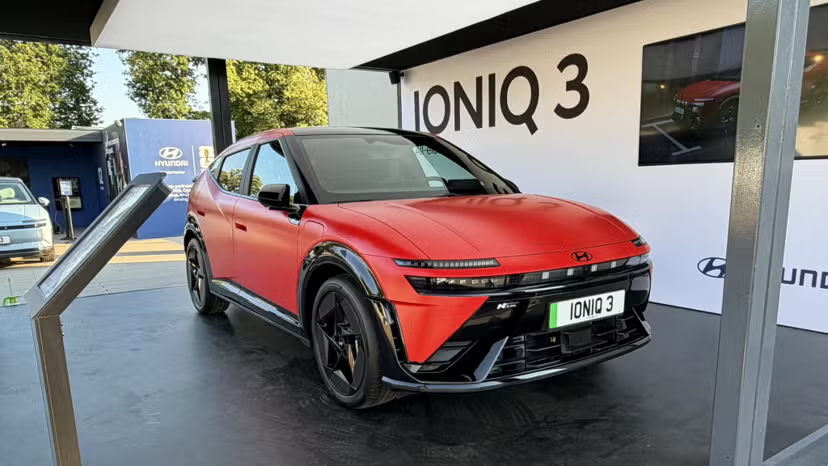
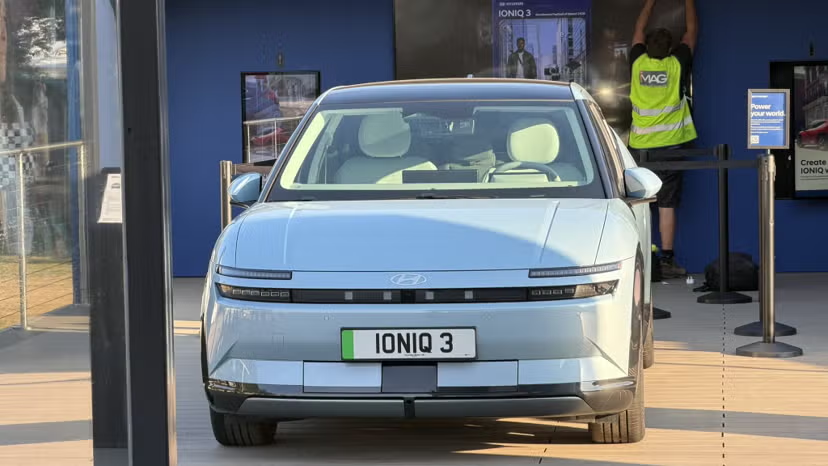
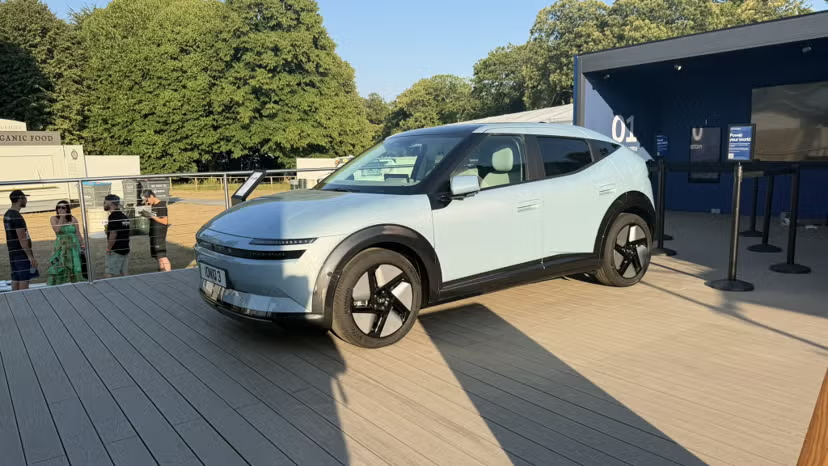
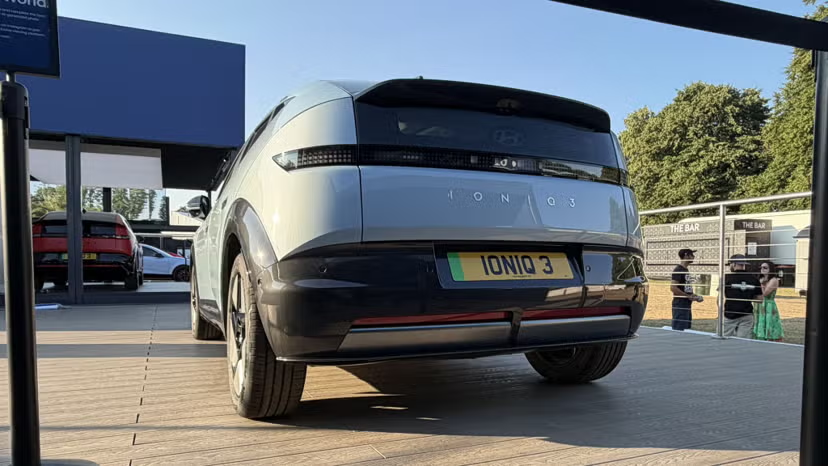
The Aero Hatch is unmistakably a Hyundai, yet it looks like nothing the brand — or frankly, anyone — has produced before. The exterior is characterized by an ultra-smooth, aerodynamically optimized body with flush door handles, a fastback-style roofline that transitions seamlessly into a blunt, chopped tail, and deeply sculpted panels that almost look melted into shape rather than stamped.
The front fascia features Hyundai's evolving parametric pixel lighting signature, now rendered as a wraparound LED strip that gives the Aero Hatch an almost sci-fi appearance. At the rear, a full-width light bar ties the design together, and the entire profile gives a nod to the classic hatchback while propelling it firmly into the future.
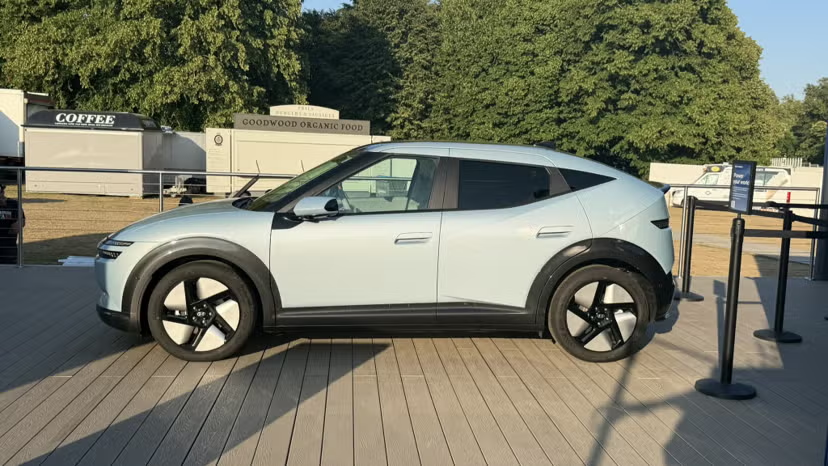
For Azerbaijani consumers accustomed to seeing European and Korean family sedans on the streets of Baku, the Aero Hatch will be a visual shock in the best possible way. Its compact footprint — roughly comparable to a Hyundai i20 in length — makes it perfectly suited for Baku's increasingly congested urban corridors and tight parking situations near the Old City or along Neftçilər Avenue.
Powertrain and Performance: Small But Spirited
Under that aerodynamic shell lies a powertrain designed for urban efficiency rather than outright performance. The Aero Hatch is powered by a single front-mounted electric motor producing approximately 134 horsepower (100 kW), paired with a 45 kWh battery pack that Hyundai claims delivers a WLTP-rated range of up to 320 kilometers (approximately 200 miles) on a single charge.
In real-world urban driving conditions — which is precisely the environment this car is engineered for — that range figure should hold up reasonably well. For Azerbaijani drivers making daily commutes between Baku's suburbs such as Xətai, Binəqədi, or Sabunçu and the city center, a 320 km range means this car could comfortably run for several days between charges.
Charging capability includes 11 kW AC onboard charging and 80 kW DC fast charging, which allows the battery to charge from 10% to 80% in approximately 30 minutes at a compatible fast charger. As Azerbaijan continues expanding its EV charging infrastructure — particularly SOCAR's growing network and third-party operators entering Baku — this level of charging flexibility becomes increasingly relevant.
The 0–100 km/h sprint is completed in a respectable 8.5 seconds — not sports car territory, but perfectly adequate for urban driving and even occasional highway merges on the Baku ring road. Top speed is electronically limited to 150 km/h, which again is entirely appropriate for its intended use case.
Interior: Minimalist Tech Meets Practical Space
Step inside the Aero Hatch and you're greeted by a cabin philosophy that prioritizes openness and digital integration. The dashboard is dominated by a 10.25-inch dual-screen setup — one for the driver's digital instrument cluster and one for the central infotainment — running Hyundai's latest ccNC (connected car Navigation Cockpit) software, which supports over-the-air updates, wireless Apple CarPlay, and Android Auto.
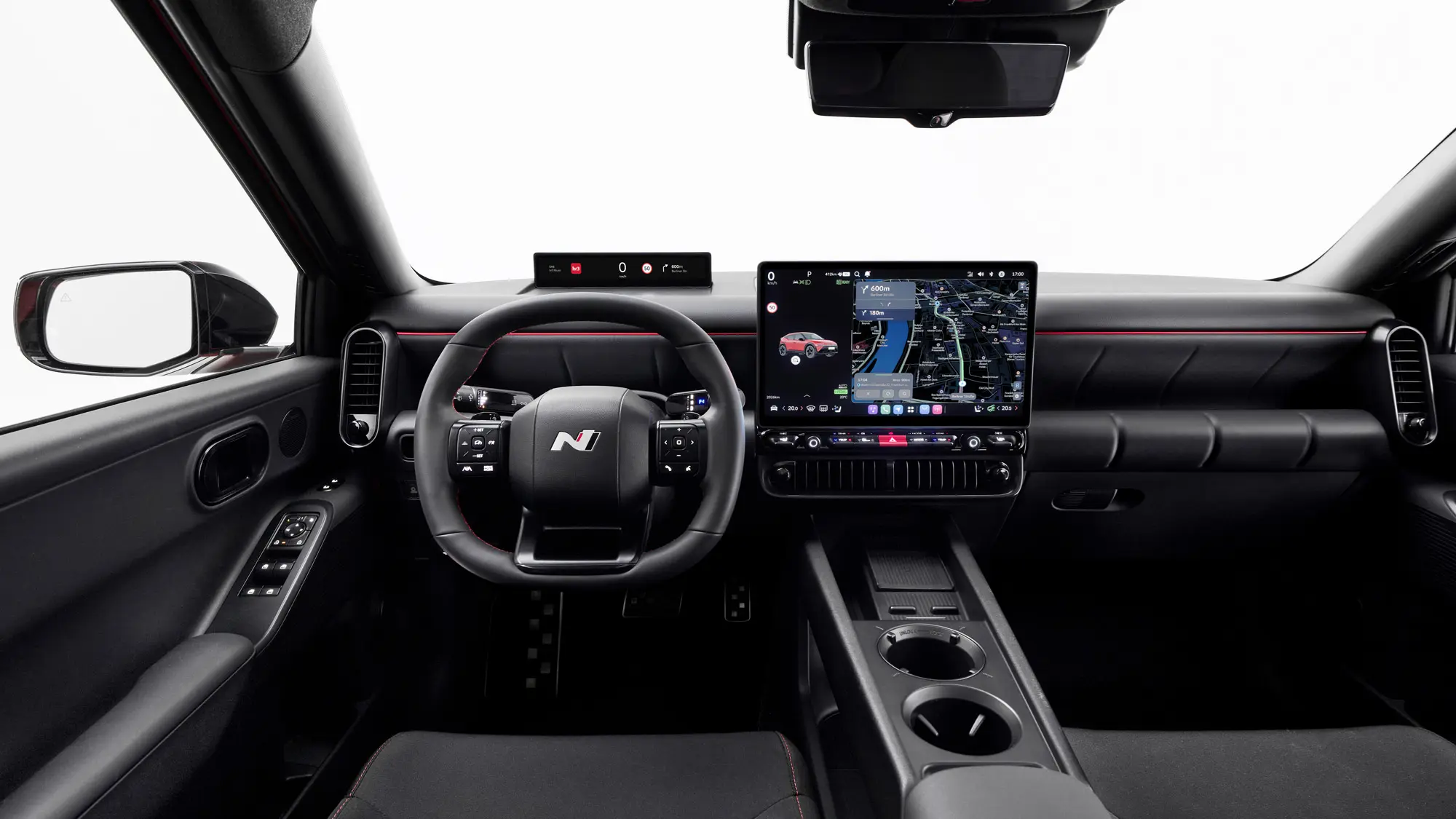
The steering wheel is a compact, squared-off unit with integrated controls, and the gear selector has been replaced with a rotary dial, freeing up significant console space. Hyundai has also incorporated a flat-floor design in the front — a direct benefit of the EV platform — which contributes to an interior that feels considerably more spacious than the car's exterior dimensions might suggest.
Rear passenger space is genuinely acceptable for a vehicle of this size, though taller adults will find the roofline begins to intrude slightly on headroom. Cargo space behind the rear seats offers around 280 liters, expandable to approximately 900 liters with the rear seats folded — functional enough for weekly grocery runs or weekend getaways from Baku to Qəbələ or Şamaxı.
Technology and Safety: Punching Above Its Weight Class
Despite its micro-car positioning, the Aero Hatch arrives with a surprisingly comprehensive suite of driver assistance and safety technologies. Standard across the range is Hyundai's SmartSense package, which includes:
- Forward Collision-Avoidance Assist (FCA) with pedestrian, cyclist, and junction detection
- Lane Keeping Assist (LKA)
- Blind-Spot Collision Warning (BCW)
- Rear Cross-Traffic Collision Warning
- Driver Attention Warning
- Highway Driving Assist (HDA) on higher trims
The vehicle has also received a strong safety assessment, with Hyundai aiming for a full 5-star Euro NCAP rating when tested — a critical consideration for safety-conscious Azerbaijani buyers who are increasingly aware of vehicle safety ratings.
What Does It Mean for Azerbaijani Consumers?
This is where the conversation gets particularly interesting for our audience in Azerbaijan. The Azerbaijani automotive market in 2026 is in a fascinating transitional phase. Government initiatives supporting EV adoption, reduced customs duties on electric vehicles, and a gradually expanding charging infrastructure are collectively lowering the barrier to EV ownership in the country.
The Hyundai Aero Hatch, if and when it reaches Azerbaijani showrooms — likely through Hyundai's official dealer network operating in Baku — would represent an accessible entry point into electric mobility. Its compact size addresses one of the most common practical objections to EV ownership in urban Azerbaijan: range anxiety on shorter city trips. With up to 320 km of range, daily urban driving anxiety is effectively eliminated.
Pricing for the Aero Hatch in European markets is expected to start at approximately €22,000–€25,000 (roughly 37,000–43,000 AZN at current exchange rates), positioning it competitively against the likes of the Renault 5 E-Tech Electric and Volkswagen ID.2. In the Azerbaijani market context, with import costs and local taxes factored in, pricing would likely settle in the 45,000–52,000 AZN range, making it a premium but increasingly accessible choice for urban professionals.
Verdict: A Genuinely Exciting Urban EV
The Hyundai Aero Hatch is not a perfect car — no car is. Its rear passenger space will challenge taller occupants, its cargo capacity is limited, and its performance figures won't thrill driving enthusiasts. But perfection was never the point.
What Hyundai has achieved with the Aero Hatch is the creation of a genuinely compelling urban electric vehicle that doesn't ask its owner to compromise on style, technology, or safety in the name of affordability and size. For Azerbaijani consumers navigating Baku's evolving urban landscape, this car makes a powerful argument for the electric future — one that is stylish, practical, technologically sophisticated, and increasingly within financial reach.
AutoTickers Rating: 8.2 / 10
Pros: Bold design, solid real-world range, comprehensive safety tech, flat-floor interior, fast charging capability.
Cons: Limited rear headroom, modest cargo space, performance is urban-focused rather than spirited.
Article by AutoTickers Automotive Editorial Team | July 2026