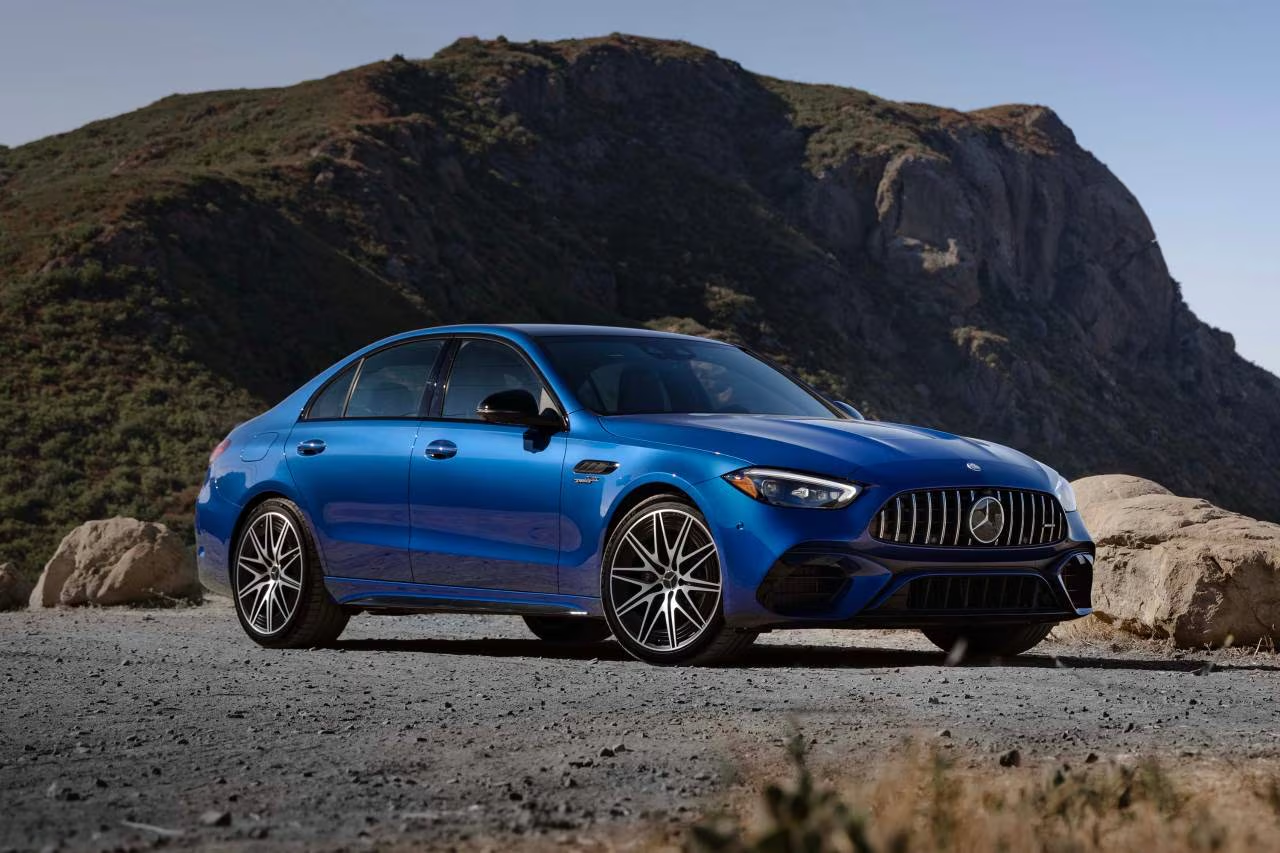
Introduction: AMG's Boldest Correction in Years
When Mercedes-AMG introduced the W206-generation C63 with a turbocharged 2.0-litre four-cylinder plug-in hybrid powertrain, the reaction from the global automotive community was — to put it diplomatically — complicated. Purists were outraged. A four-cylinder AMG C63? The nameplate that once carried a thunderous 4.0-litre twin-turbo V8 had been reduced, in the eyes of many, to a hot hatchback with a badge problem. Yes, the numbers looked impressive on paper — over 670 hp combined — but the character, the soul, the growl that made AMG fans fall in love was missing.
Fast forward to 2026, and Mercedes-AMG has done something remarkable: it has listened. The new Mercedes-AMG C53 steps in as a new nameplate positioned above the C43 but below the complexity of the C63's PHEV architecture, and it brings back something that enthusiasts have been craving — a proper turbocharged inline-six engine.
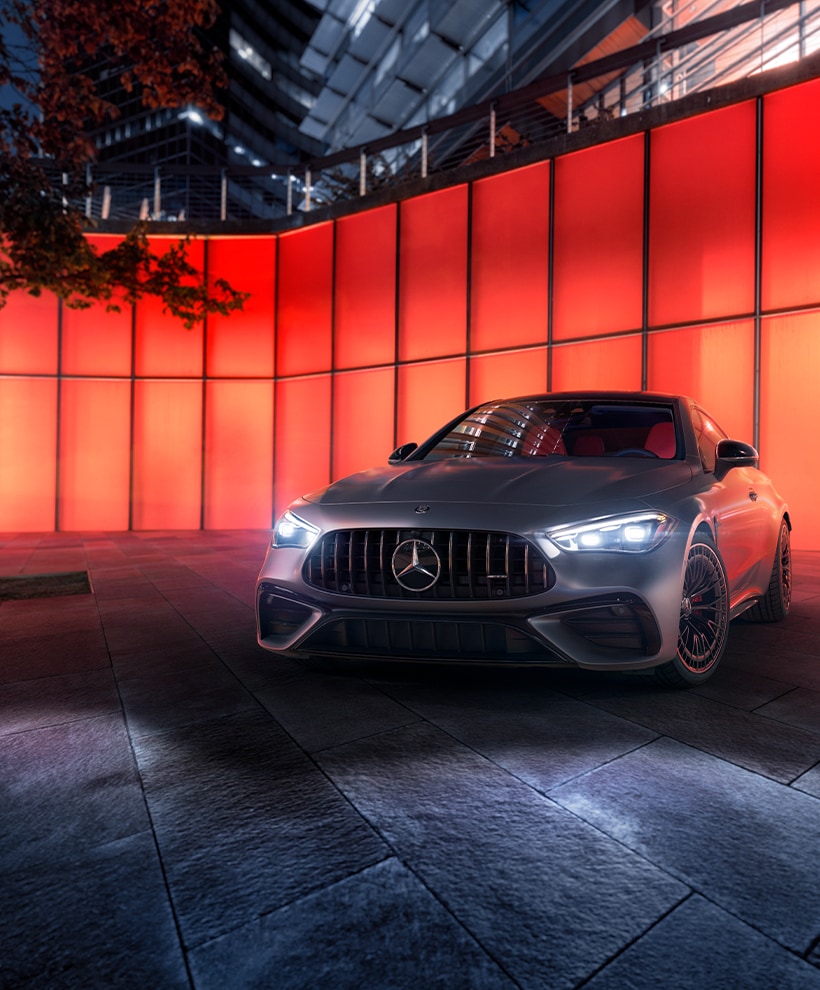
The Engine: Why the Inline-Six Changes Everything
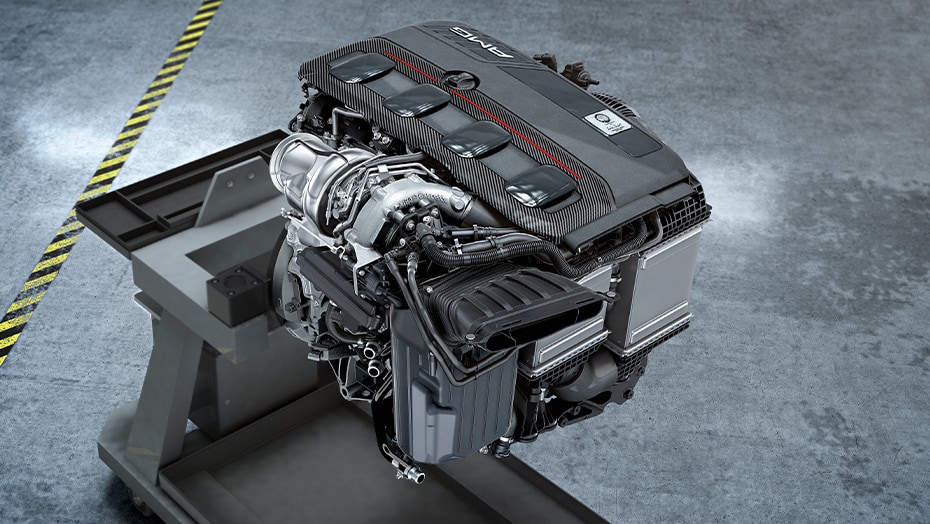
At the heart of the AMG C53 sits AMG's familiar M256 3.0-litre turbocharged inline-six engine, paired with a 48-volt mild-hybrid system and an integrated starter-generator (ISG). This is not a watered-down unit — it is the same family of engine found in the AMG 53-series across other Mercedes models, tuned here to deliver a more focused and driver-centric experience.
The C53 produces around 435 horsepower and 520 Nm of torque, channelled through AMG's nine-speed MCT gearbox and sent to all four wheels via AMG's Performance 4MATIC+ all-wheel-drive system. Crucially, the electric boost from the ISG provides an additional 20 hp on demand, ensuring instant throttle response in a way that complements the linear pull of the straight-six rather than masking deficiencies.
Compare this to the C63 PHEV's setup: a 2.0-litre turbocharged four-cylinder producing around 476 hp on its own, supplemented by a 201 hp rear-axle electric motor for a combined 671 hp. While the total output sounds spectacular, the real-world driving experience was criticised for feeling disconnected, heavy (the car weighed over 2,100 kg with its battery pack), and overly reliant on software to manage the two very different power sources. Many reviewers found the transitions between combustion and electric power jarring, and the loss of the silky V8 soundtrack was never truly compensated for.
Character vs. Numbers: What the I6 Brings Back
There is a reason why automotive enthusiasts have historically revered the inline-six configuration. It is inherently balanced — the firing intervals are perfectly even, producing a smooth, refined power delivery that four-cylinders simply cannot replicate, no matter how much turbocharging or electric assistance is applied. The straight-six revs with a purpose, builds power with a crescendo, and sounds absolutely magnificent doing so.
In the C53, this translates to a driving experience that feels organic and linear. Push the throttle and the response is immediate and progressive — the car pulls cleanly through the rev range without the artificial spikes or electronic patchwork that the C63 PHEV required to feel fast. The soundtrack through the optional sports exhaust system is throaty, layered, and unmistakably AMG — a quality that had gone missing from the C-Class performance lineup for too long.
Where the C63 PHEV's 2,100+ kg kerb weight made it feel more like a performance SUV in a saloon body, the C53 sheds significant mass. Without the heavy battery pack and the dual-motor architecture, the C53 is estimated to sit closer to 1,750 kg, which is a transformative difference in how the car rotates, changes direction, and communicates with the driver through the steering and chassis.
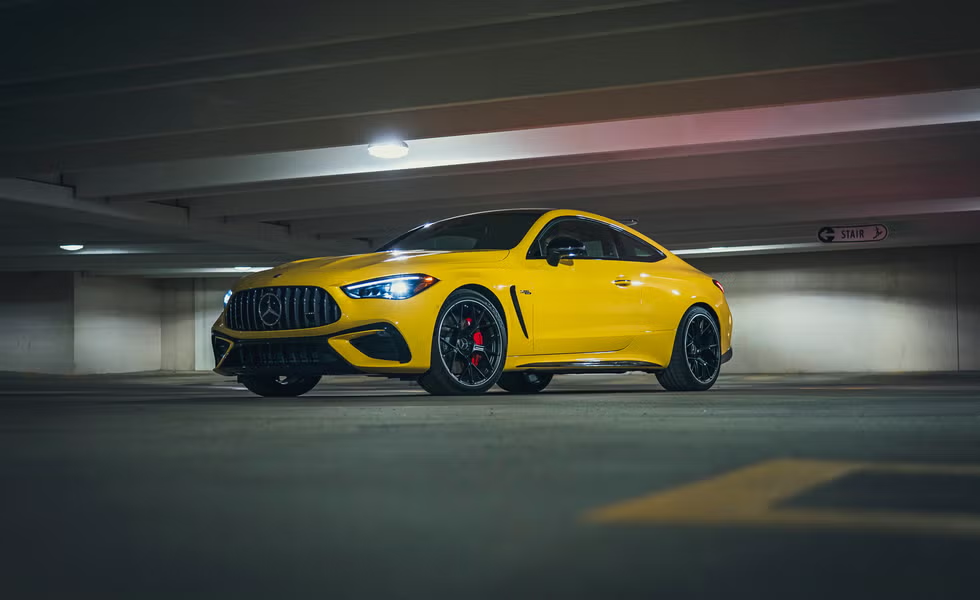
Chassis and Dynamics: Built to Drive, Not Just Perform
The C53 rides on the same AMG-tuned suspension architecture as its siblings, featuring adaptive damping, an electronically controlled limited-slip differential on the rear axle, and AMG's Ride Control+ system. The steering has been calibrated to deliver more feedback than the outgoing C63, which — despite its power — often felt numb and disconnected through the wheel.
AMG has also introduced revised AMG DYNAMICS drive modes for the C53, spanning from Comfort through Sport, Sport+, and the track-focused RACE mode. The rear-wheel-drive bias of the 4MATIC+ system can be dialled in significantly in Sport+ and RACE modes, allowing the C53 to rotate with a playfulness that the heavy C63 PHEV could never truly achieve without feeling unnatural.
Braking duties are handled by large ventilated discs — 390 mm up front — with optional AMG ceramic composite brakes available for track enthusiasts. The wheel sizes span from 19 to 20 inches, shod with performance tyres tuned specifically for the C53's weight and power characteristics.
Interior and Technology: AMG's Digital Cockpit Evolves
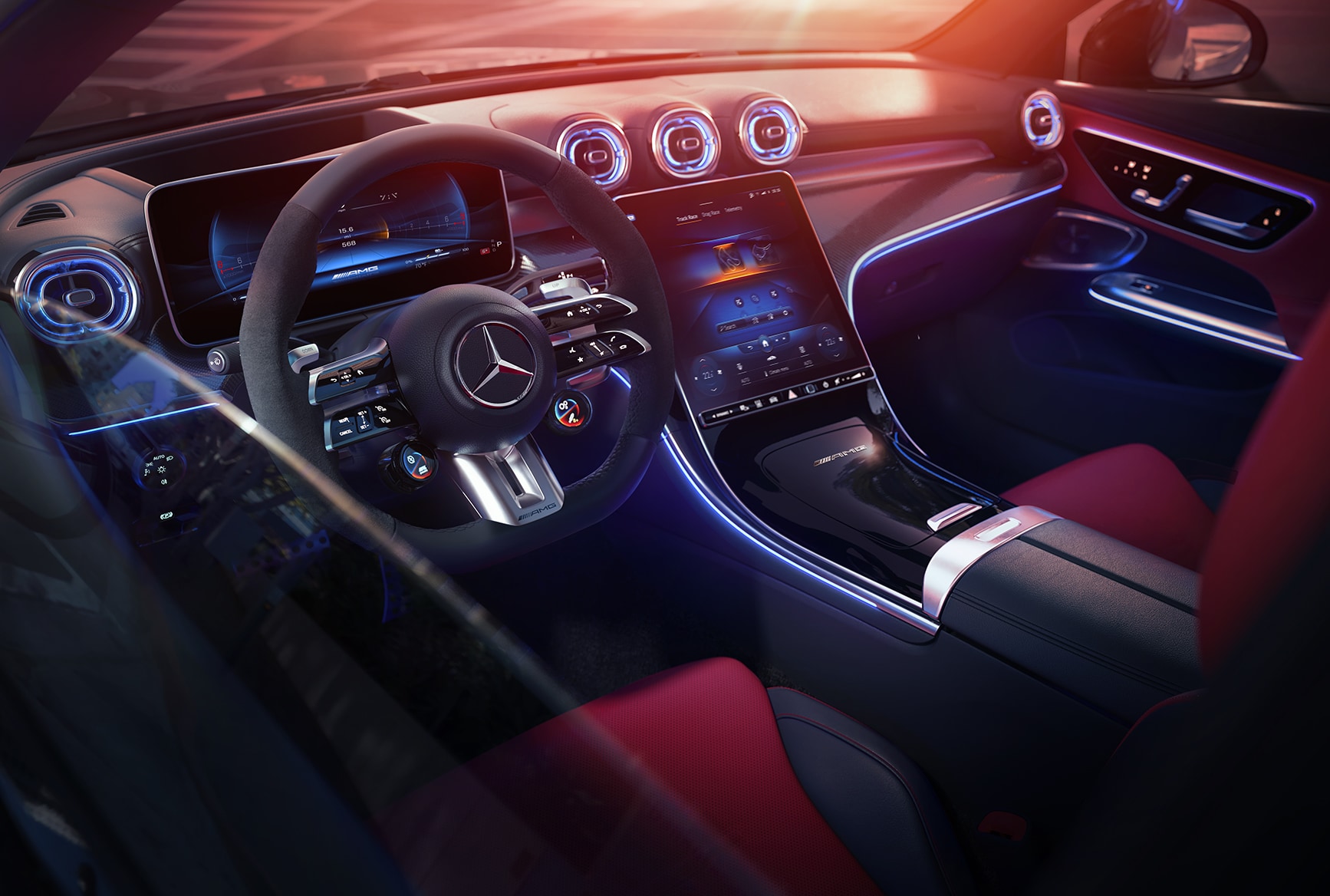
Step inside the C53 and you are greeted by Mercedes' latest MBUX Superscreen setup — an expansive curved display that spans the dashboard, housing the 12.3-inch digital instrument cluster and the 11.9-inch central touchscreen running the latest AMG-specific interface. The AMG Track Pace app returns, offering real-time lap timing, G-force measurement, and performance data logging for those who want to push the car on circuit.
The cabin materials have been elevated for 2026, with the C53 receiving exclusive Nappa leather upholstery options, carbon fibre trim elements, and AMG Performance seats with enhanced lateral support. The overall ambiance is one of purposeful luxury — not overwrought, not spartan, but precisely calibrated to make you feel like you are piloting something special.
AMG's latest over-the-air update system ensures that the C53's software remains current throughout its lifecycle, with performance calibrations, navigation updates, and feature additions delivered wirelessly.
C53 vs C63: The Honest Comparison
Let us be direct. On paper, the C63 PHEV still wins the horsepower battle — 671 hp vs approximately 435 hp for the C53. But horsepower figures without context are meaningless. Here is the real-world scorecard:
- Weight: C53 wins decisively — roughly 350 kg lighter than the C63 PHEV, translating to sharper handling and better agility.
- Engine Character: C53 wins — the inline-six is inherently smoother, more characterful, and more rewarding to drive than the turbocharged four-cylinder.
- Sound: C53 wins — the straight-six exhaust note is authentically AMG in a way the C63 PHEV's four-cylinder never achieved.
- Everyday Usability: C53 wins — no battery management anxiety, no mandatory charging, lighter and more nimble in urban conditions.
- Complexity: C53 wins — the mild-hybrid system is simpler and less prone to the thermal management issues that plagued some C63 PHEV examples.
- Raw Power Figure: C63 wins on numbers alone — but numbers, as we have established, do not tell the whole story.
The C63 PHEV was an engineering showcase. The C53 is a driver's car. For AMG enthusiasts, that distinction matters enormously.
AutoTickers Verdict
The Mercedes-AMG C53 represents something important beyond just a new model — it represents AMG's acknowledgement that engineering brilliance must serve the driving experience, not overshadow it. The inline-six engine is not just a powerplant; it is a philosophy. It says that AMG still believes in the purity of a well-engineered combustion engine, the joy of mechanical character, and the irreplaceable connection between driver and machine.
After the C63 PHEV's controversial four-cylinder chapter, the C53 feels like AMG finding its way back home. It is lighter, more characterful, more honest, and — we suspect — far more likely to be remembered fondly a decade from now.
For performance car buyers in Azerbaijan and beyond, the AMG C53 is, without question, the C-Class performance model to have in 2026. The numbers may not be the biggest on the spec sheet, but the experience it delivers is everything that number-chasing should never replace.
— AutoTickers Automotive Team