EVs, Gas Prices, and Car Inventory in Baku: What Azerbaijani Buyers Need to Know Right Now
From shifting fuel prices at Baku pumps to growing EV availability and expanding dealership inventory across Azerbaijan, today's car buyers face a rapidly evolving local market. Here is a comprehensive guide to the forces shaping automotive choices in Azerbaijan and how to make the smartest purchase decision.
H
Hür Abbas Cəfəri
Avtomobil jurnalisti və nəqliyyat eksperti
## EVs, Gas Prices, and Car Inventory in Baku: What Azerbaijani Buyers Need to Know Right Now
The automotive market in Azerbaijan is undergoing a significant transformation. From the growing availability of electric vehicles (EVs) to fluctuating domestic fuel prices and a rapidly diversifying dealership landscape, car shoppers in Baku and across the country must navigate a market that looks fundamentally different from just a few years ago. Whether you are looking for a new gasoline-powered sedan, a hybrid SUV, or a fully electric vehicle, understanding the forces shaping today's Azerbaijani market can save you considerable money and significant stress.
### Fuel Prices in Azerbaijan: A Locally Shaped Reality
Unlike most countries that import petroleum products at world market prices, Azerbaijan occupies a unique position as an oil-producing nation. Domestic fuel prices are substantially influenced by the State Oil Company of the Azerbaijan Republic (SOCAR), which manages production, refining, and a significant portion of the country's retail fuel network.
According to data from the State Statistics Committee of Azerbaijan, retail prices for AI-95 grade petrol in Azerbaijan averaged approximately 1.10–1.30 AZN per litre in 2024. By comparison, the European Union average petrol price in the same period hovered around 1.60–1.80 EUR per litre, making Azerbaijani fuel considerably more affordable in relative terms.
However, Azerbaijani drivers are not fully insulated from global trends. Rising global energy prices, inflationary pressures on imported components, and broader macroeconomic shifts have gradually placed upward pressure on domestic pump prices over recent years. The government periodically adjusts regulated fuel prices, and consumers should expect gradual increases over the medium term as the economy integrates further with global markets.
For Baku residents who commute daily, fuel costs remain a meaningful household expense. A typical private car owner in Baku driving approximately 1,500 km per month in a mid-size petrol vehicle consuming around 9 litres per 100 km would spend roughly 150–180 AZN monthly on fuel alone. This calculation makes the total cost of ownership comparison between petrol, hybrid, and electric vehicles increasingly relevant for Azerbaijani buyers.
### The EV Market in Azerbaijan: Early Stage, Growing Fast
Electric vehicles are no longer a curiosity on Baku's streets. The number of registered EVs in Azerbaijan has grown steadily year-on-year since 2021, driven by a combination of growing global EV availability, increasingly competitive pricing from Chinese manufacturers, and rising consumer awareness. Azerbaijani customs and transport ministry data confirm a consistent upward trend in EV imports over this period.
The most visible EV models on Baku roads currently include:
- **Tesla Model 3 and Model Y:** Still among the most recognised EV brands, though their relatively high import costs after customs duties make them a premium choice in the Azerbaijani market.
- **Hyundai IONIQ 5 and Kia EV6:** Well-regarded Korean EVs with strong build quality and competitive ranges. The IONIQ 5 offers up to approximately 481 km of range (WLTP), and the EV6 offers up to approximately 528 km (WLTP).
- **BYD:** China's largest EV manufacturer has been making inroads into the Azerbaijani market. Models such as the BYD Atto 3 and BYD Seal offer competitive pricing relative to European equivalents, with the Atto 3 delivering a WLTP range of approximately 420 km.
- **Chery Jetour and Changan EV models:** Other Chinese brands have also entered the local market, offering affordable entry points for first-time EV buyers.
Globally, EV sales surpassed 14 million units in 2023, representing approximately 18% of all new car sales worldwide, according to the International Energy Agency (IEA) Global EV Outlook 2024. Battery pack costs have fallen dramatically, from over $1,000 per kWh in 2010 to approximately $139 per kWh in 2023 according to BloombergNEF, which is driving EVs to price parity with petrol vehicles in a growing number of segments.
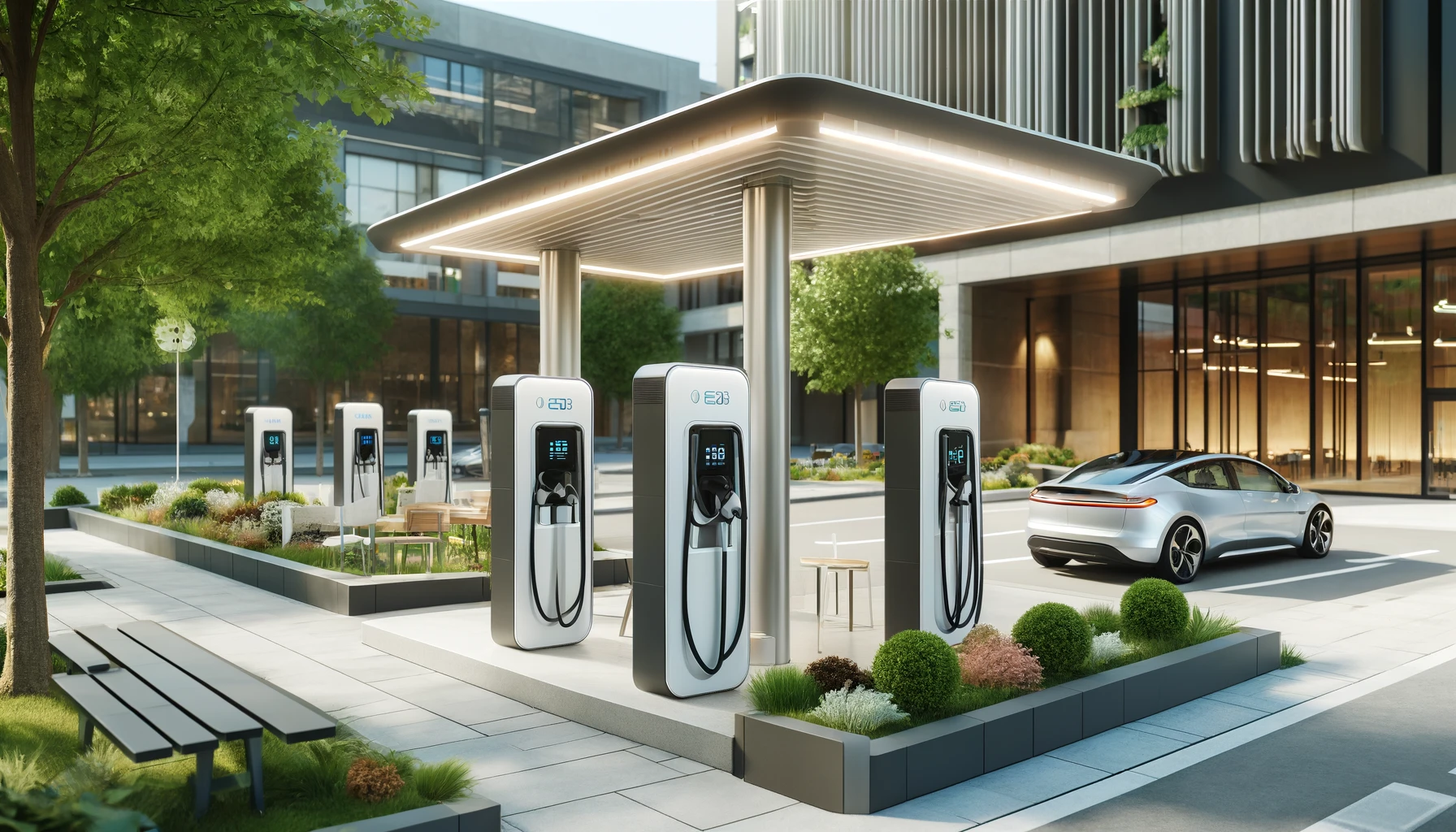
### Charging Infrastructure in Baku: Progress with Gaps
One of the most practical concerns for any Azerbaijani buyer considering an EV is the state of the charging network. The situation in Baku has improved meaningfully in recent years, but important limitations remain outside the capital.
In central Baku, public EV charging stations have been installed at an increasing number of locations, particularly in commercial districts, near major shopping centres such as Port Baku Mall, Park Bulvar, and Ganjlik Mall, and in some hotel and business facility car parks. Several operators have deployed both AC slow chargers and DC fast chargers in the city.
However, the picture changes significantly once you travel beyond Baku. Charging infrastructure along regional highways, in cities such as Ganja, Mingachevir, Lankaran, and Sheki, and in rural areas remains sparse and unreliable. For buyers who regularly travel outside the capital, this remains a genuine practical constraint that should be honestly assessed before committing to a fully battery-electric vehicle.
The government of Azerbaijan has signalled its intention to expand EV charging infrastructure as part of the country's broader energy transition and green economy strategy. However, the pace of expansion will need to accelerate significantly to support widespread EV adoption across the country's regions.
For urban Baku residents who can charge at home — typically via a standard 220V household outlet or a dedicated wallbox charger — the infrastructure concern is largely manageable. Overnight home charging on a standard outlet can add approximately 40–60 km of range per hour, sufficient for typical daily urban commuting.
### Import Duties and Taxes on Vehicles in Azerbaijan: What Buyers Pay
Understanding the full landed cost of an imported vehicle is essential for Azerbaijani buyers, as import duties and taxes significantly affect the final purchase price.
For passenger cars imported into Azerbaijan, customs duties are generally calculated based on engine displacement and vehicle age. New petrol and diesel vehicles typically attract customs duties ranging from approximately 0.7 to 1.0 USD per cubic centimetre of engine displacement, depending on the engine size category. Value Added Tax (VAT) at 18% is applied on top of the customs value plus duty.
For electric vehicles specifically, there have been discussions at the government level about introducing preferential import duty treatment to encourage EV adoption — a policy already implemented in neighbouring Georgia, where EVs benefit from reduced import tariffs. As of the time of writing, no formal blanket EV duty exemption has been enacted in Azerbaijan, meaning that EV import costs remain subject to standard duty schedules. Buyers should verify the current applicable duty rates with a licensed customs broker or directly with the State Customs Committee of Azerbaijan before making a purchase, as regulations can change.
Vehicles imported from countries with preferential trade agreements with Azerbaijan may attract lower duty rates. Given Azerbaijan's trade relationships, buyers sourcing vehicles from certain Commonwealth of Independent States (CIS) countries may benefit from reduced tariff rates under applicable agreements.
### Dealership Inventory in Azerbaijan: More Choice Than Ever Before
The global semiconductor chip shortage that caused severe new vehicle inventory shortages in 2021 and 2022 has largely resolved. This recovery has had a positive knock-on effect for Azerbaijani consumers as well.
Local dealers across Baku report that inventory levels of mainstream European and Korean brands — including Hyundai, Kia, Toyota, Volkswagen, Mercedes-Benz, and BMW — have normalised, with a broader range of trims, colours, and configurations available compared to the shortage period. Waiting times that stretched to six to twelve months for some popular models in 2022 have returned to more typical lead times of four to eight weeks for most vehicles.
Perhaps the most notable development in the Azerbaijani vehicle market over the past two years has been the dramatic expansion of Chinese brand availability. Brands including BYD, Chery, Haval, Changan, Geely, and MG (owned by SAIC Motor) have established or significantly strengthened their dealer networks in Baku and other major Azerbaijani cities. These brands are competing aggressively on price, offering modern technology features, reasonable quality, and warranty packages that have improved substantially compared to perceptions of Chinese vehicles from a decade ago.
For Azerbaijani buyers, this expansion of Chinese brand availability represents a meaningful shift in market dynamics, providing competitive alternatives to established European and Japanese brands at significantly lower price points.
### Hybrid Vehicles: The Practical Choice for Many Azerbaijani Buyers
For consumers not yet ready to commit to a fully battery-electric vehicle — particularly those who travel regularly outside Baku where charging infrastructure is limited — hybrid vehicles offer a highly practical middle ground.
Toyota remains the global leader in hybrid technology, and its hybrid models are popular in Azerbaijan. The Toyota RAV4 Hybrid, for example, achieves approximately 6.0 litres per 100 km in combined driving, compared to roughly 8.5–9.5 litres per 100 km for a comparable petrol-only SUV. At current Azerbaijani fuel prices of approximately 1.20 AZN per litre for AI-95, this translates to a fuel cost saving of approximately 30–40 AZN per 1,000 km driven — a meaningful saving over the vehicle's lifetime.
Plug-in hybrid electric vehicles (PHEVs) offer even greater efficiency for buyers who can charge at home, allowing short daily commutes to be covered entirely on electric power while retaining a petrol engine for longer journeys. In the Azerbaijani context, PHEVs represent a sensible bridge technology for the current phase of charging infrastructure development.
Hybrid and PHEV models from Hyundai, Kia, Ford, and increasingly from Chinese brands such as BYD (which sells many vehicles as plug-in hybrids rather than pure EVs) are also available in the Azerbaijani market, offering buyers a broad range of options.
### Smart Buying Strategies for Azerbaijani Car Buyers Today
Given the dynamics of the current Azerbaijani automotive market, here are the most important practical considerations for buyers:
**1. Calculate Your Total Cost of Ownership:** Do not compare vehicles solely on their sticker price. Factor in fuel costs at current Azerbaijani pump prices, expected maintenance expenses, insurance premiums, customs duty already paid (reflected in dealer asking prices), and expected resale value. EVs and hybrids typically deliver lower running costs but may carry higher upfront purchase prices.
**2. Honestly Assess Your Charging Situation:** If you live in central Baku in an apartment building, determine whether you have access to a dedicated parking space where a charging point can be installed, or whether you will depend entirely on public charging. If you live in a house with private parking, home charging is straightforward and cost-effective. If you regularly travel to regions outside Baku, a hybrid or PHEV is likely the more practical choice at this stage of infrastructure development.
**3. Negotiate Actively:** With vehicle inventory at healthy levels and competition among dealers intensifying — particularly with the arrival of Chinese brands — buyers are in a stronger negotiating position than they were during the shortage years of 2021 and 2022. Research prices across multiple dealers, including both established franchised dealers and parallel importers, and do not hesitate to request discounts, free accessories, or extended warranty terms.
**4. Consider Timing:** End of month and end of quarter are traditionally the best times to negotiate vehicle purchases, as sales staff are motivated to meet monthly and quarterly targets. Dealers near the end of their target periods are typically more willing to offer additional discounts or benefits.
**5. Evaluate Financing Options Carefully:** Vehicle financing is available in Azerbaijan through local banks and some manufacturer-affiliated financing arrangements. Compare the Annual Percentage Rate (APR) across multiple financing options and calculate the total amount repayable over the loan term, not just the monthly payment. A lower monthly payment achieved by extending the loan term may result in significantly higher total interest costs.
**6. Consider Chinese Brands Objectively:** Chinese automotive brands have made remarkable advances in quality, safety, and technology over the past five years. Brands such as BYD, Haval, Chery, Geely, and MG now offer vehicles with genuinely competitive build quality, comprehensive warranty packages of typically five years or more, and modern driver assistance and infotainment technology — all at price points meaningfully below equivalent European and Japanese models. These vehicles deserve serious, unprejudiced evaluation by Azerbaijani buyers.
**7. Verify Import History for Grey Market Vehicles:** A significant share of vehicles in the Azerbaijani market are imported through parallel channels rather than official brand dealerships — including cars sourced from the UAE, Russia, Europe, and the United States. For such vehicles, carefully verify the vehicle's full service history, previous market of sale, odometer reading, and whether any manufacturer warranty remains transferable. Independent pre-purchase inspection by a qualified mechanic is strongly advisable.
### The Road Ahead for Azerbaijan's Auto Market
The next five years will bring continued and accelerating change to the Azerbaijani automotive market. Globally, the International Energy Agency projects that EVs will account for a growing share of new vehicle sales through the end of this decade, driven by continued battery cost reductions and expanding model ranges from virtually every major manufacturer.
For Azerbaijan specifically, the key developments to watch include:
- **Charging infrastructure expansion:** Government commitment to expanding the public charging network will be a critical determinant of how quickly EV adoption accelerates beyond Baku.
- **Potential EV import duty incentives:** Any policy move to reduce customs duties on electric vehicles — similar to Georgia's approach — would significantly accelerate EV market growth.
- **Continued growth of Chinese brand presence:** Chinese manufacturers are aggressively expanding their global footprint, and Azerbaijan's market will continue to see growing model availability and competitive pricing from this segment.
- **Solid-state battery technology:** Leading manufacturers including Toyota are targeting commercial production of solid-state batteries by 2027–2028, promising dramatically improved range and faster charging times that will further strengthen the EV value proposition.
For Azerbaijani consumers, the most important step is to approach the vehicle purchase process with thorough research and a clear-eyed view of your own driving needs, charging capabilities, and total budget. The era of simply accepting whatever a dealer has on the lot at the asking price is over. Today's informed Azerbaijani car buyer has more options, more competitive pricing, and more tools to make a well-considered decision than at any previous point in the country's automotive history. Use them.
Tags
#electric vehicles
#EV market Azerbaijan
#gas prices Baku
#car buying guide Azerbaijan
#hybrid cars
#automotive industry Azerbaijan
#EV charging Baku
#car inventory
#BYD Azerbaijan
#Tesla Azerbaijan
#Toyota hybrid
#Chinese car brands
#fuel economy
#car financing Azerbaijan
#SOCAR fuel prices
#Hyundai IONIQ 5
#Kia EV6
#import duties Azerbaijan
Share